
Blog
A Complete Guide to Choosing the Right Immersion Rod

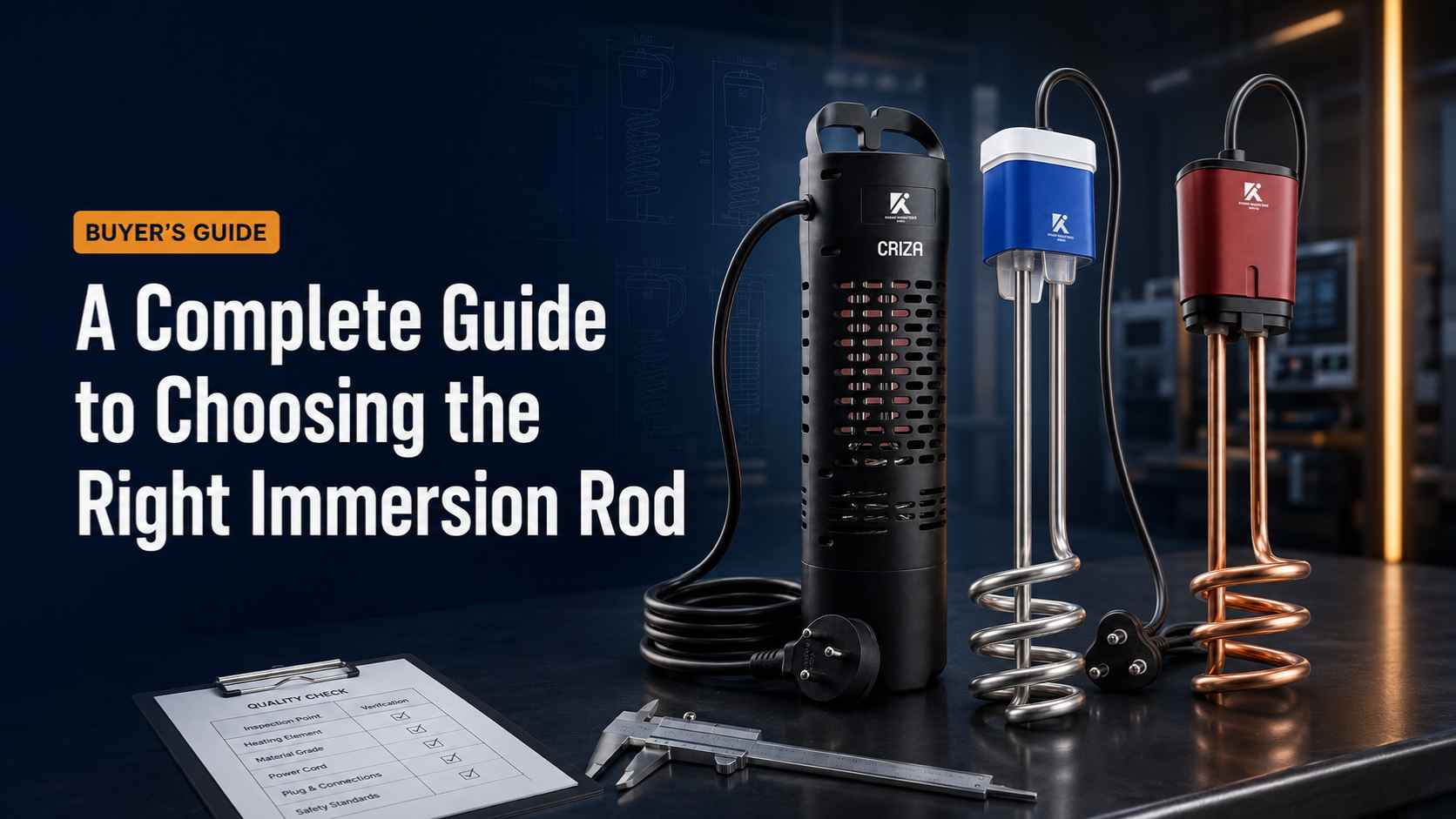
An immersion rod is a practical electrical appliance designed to heat water directly inside a suitable container. Its simple operation, portability and affordability make it a popular choice for homes, hostels, rented accommodation and other everyday applications.
However, immersion rods are available in different designs, wattages, materials and configurations. Choosing the correct model requires more than selecting the lowest-priced option.
For brands, distributors, wholesalers and bulk buyers, product quality can directly affect customer experience, product returns and market reputation. This guide explains the most important factors to consider when selecting immersion rods.
How Does an Immersion Rod Work?
An immersion rod uses an electrical heating element to transfer heat directly into water. The metal heating section is placed inside a suitable water container while the handle, cable and electrical connection remain safely outside the water.
Once connected to an appropriate power source, the heating element begins raising the water temperature.
The exact heating time depends on factors such as:
- Wattage of the immersion rod
- Quantity of water
- Initial water temperature
- Container type
- Product design
- Power-supply conditions
- Surrounding temperature
Users must always follow the product instructions and applicable electrical-safety precautions.
Important Factors to Consider
1. Select the Appropriate Wattage
Wattage influences power consumption and the speed at which an immersion rod can heat water.
Different models may be offered in different wattage options. A higher wattage can generally heat water faster, but it also requires an electrical connection suitable for the appliance’s rated load.
When selecting a wattage, consider:
- Intended application
- Typical water quantity
- Expected heating speed
- Available electrical supply
- Target customer requirements
- Applicable product specifications
Bulk buyers should avoid assuming that one wattage will be suitable for every market. Discuss the available options and intended applications with the manufacturer before finalising a model.
2. Examine the Heating Element
The heating element is the main functional component of an immersion rod. Its material, construction and finishing influence heating performance and product durability.
While evaluating a sample, examine:
- Heating-element material
- Surface finishing
- Shape and construction
- Alignment of metal sections
- Joint finishing
- Resistance to ordinary use
- Suitability for the intended application
The element should appear properly aligned and professionally finished, without visible defects or irregular joints.
Material options may differ between models. Confirm the exact specification with the manufacturer before ordering.
3. Evaluate the Handle and Body Construction
The handle supports the electrical components and helps users position the immersion rod correctly.
A suitable handle should be practical, robust and comfortable to manage. Check:
- Handle material
- Product dimensions
- Grip and balance
- Joint construction
- Surface finishing
- Stability of assembled components
- Product markings
- Cable entry point
The handle should remain outside the water during use. Product instructions should clearly explain the correct immersion level and operating procedure.
4. Check the Cord Length and Quality
Cord length affects convenience and product usability. An excessively short cable may limit where the appliance can be used, while poor cord construction may reduce product reliability.
Review the following:
- Cable length
- Cable thickness
- Outer insulation
- Flexibility
- Strain relief near the handle
- Strain relief near the plug
- Connection stability
- Cable colour
For bulk orders, the approved cord length and colour should be clearly documented before production begins.
The cable should never be allowed to enter the water during operation.
5. Confirm the Correct Plug Configuration
The power plug must be appropriate for the intended market and the electrical rating of the selected model.
For immersion rods intended for the Indian market, buyers should confirm the required Indian three-pin plug configuration with the manufacturer.
Check:
- Number of pins
- Pin thickness
- Plug-body construction
- Cable connection
- Strain relief
- Compatibility with the intended socket
- Suitability for the product’s electrical rating
A plug should not be selected only according to appearance. The complete electrical specification must be reviewed and approved.
6. Review Product Safety Features
Electrical appliances that operate near water require careful handling and clear operating instructions.
Depending on the product model and intended market, buyers should discuss:
- Insulated handle construction
- Cable insulation
- Plug configuration
- Strain-relief design
- Product markings
- Permitted immersion level
- Usage instructions
- Warning labels
- Applicable testing requirements
Product safety depends on both manufacturing quality and correct user operation. The immersion rod should always be used according to the instructions supplied with the product.
7. Evaluate Heating Efficiency
An immersion rod should transfer heat effectively while delivering performance appropriate to its stated rating and application.
When evaluating a sample, consider:
- Heating time
- Consistency of performance
- Heat transfer
- Product stability
- Power requirements
- Intended water quantity
Testing should be performed under suitable and controlled conditions. Compare models using the same water quantity, container and power conditions for a meaningful evaluation.
8. Consider Product Size and Portability
One advantage of an immersion rod is its relatively compact and portable form.
However, product size should match the intended application. Evaluate:
- Overall length
- Heating-element length
- Handle size
- Cable length
- Product weight
- Storage convenience
- Packaging dimensions
For retail and e-commerce businesses, packaging size can also influence storage, transportation and shipping costs.
9. Inspect Product Finishing
Product finishing contributes to customer perception and can indicate the manufacturer’s attention to detail.
Inspect the sample for:
- Smooth handle finish
- Proper component alignment
- Secure assembly
- Clean joints
- Consistent colours
- Clear labels
- Neat cable entry
- Properly finished heating element
For private-label products, the finish should align with the desired market position and brand presentation.
10. Explore OEM and Private-Label Options
Businesses introducing immersion rods under their own brand may require OEM or private-label support.
Subject to feasibility and order quantity, possible options may include:
- Product model selection
- Wattage selection
- Handle colour
- Cable colour and length
- Plug configuration
- Brand-name placement
- Product labels
- Instruction materials
- Individual packaging
- Master cartons
Custom requirements should be documented and approved before production begins.
How to Compare Different Immersion Rod Models
When comparing models, use a structured evaluation method instead of reviewing appearance alone.
Create a comparison sheet covering:
| Evaluation Area | What to Check |
|---|---|
| Wattage | Suitability for the intended application |
| Heating element | Material, shape, alignment and finishing |
| Handle | Construction, grip and insulation |
| Cable | Length, insulation and flexibility |
| Plug | Correct configuration and secure connection |
| Performance | Heating time and consistency |
| Finishing | Colour, joints, labels and assembly |
| Packaging | Product protection and brand presentation |
| OEM options | Colour, branding and specification choices |
Evaluating every sample using the same criteria makes product comparison more objective.
Questions to Ask an Immersion Rod Manufacturer
Before confirming a bulk order, ask:
- Which immersion rod models are available?
- What wattage options are offered?
- What material is used for the heating element?
- What cord lengths are available?
- Which plug configuration is supplied?
- Can the handle or cable colour be customised?
- Can our brand name be placed on the product?
- Is private-label packaging available?
- What is the minimum order quantity?
- What is the expected production lead time?
- How is quality maintained across bulk orders?
- Which specifications must be approved before production?
- Can the manufacturer support repeat and larger orders?
Essential Usage Precautions
The following precautions should be communicated clearly to end users:
- Read the supplied instructions before use.
- Use a stable container suitable for heating water.
- Place the heating element into the water only up to the permitted level.
- Keep the handle, power cord, plug and electrical connection away from water.
- Do not touch the water, container or heating element while the appliance is connected to power.
- Do not operate the product without sufficient water.
- Disconnect the power before removing or handling the immersion rod.
- Allow the heating element to cool before storage.
- Do not use a damaged cable, plug or heating element.
- Keep the appliance away from children.
- Use only with a suitable electrical supply and socket.
- Follow all warnings and instructions supplied with the product.
The final product manual should reflect its actual design, rating and applicable requirements.
Common Buying Mistakes to Avoid
Bulk buyers should avoid:
- Selecting a model based only on price
- Ignoring the heating-element material
- Failing to confirm wattage
- Choosing an incorrect plug configuration
- Accepting an excessively short cable
- Overlooking handle construction
- Approving bulk production without evaluating a sample
- Failing to document colours and specifications
- Ignoring packaging protection
- Choosing a supplier without evaluating production capacity
A clear approval process can help reduce product variations and misunderstandings.
Why Source Immersion Rods from Khush Industries?
Khush Industries (India) is an experienced OEM manufacturer of dry irons and immersion rods.
Founded in 1998, the company has grown from a small trading business in Madurai into a large-scale electrical appliance manufacturing operation. Today, Khush Industries operates from a modern 30,000 sq. ft. facility in Ahmedabad, Gujarat.
Our immersion rod manufacturing support includes:
- Multiple product designs
- Different wattage options
- In-house die development
- Long-cord options
- Indian three-pin plug configurations
- Product colour possibilities
- OEM and private-label support
- Branding and packaging coordination
- Bulk production capabilities
All specifications and customisation possibilities are subject to manufacturing feasibility, order quantity and mutually approved requirements.
Conclusion
Choosing the right immersion rod requires careful evaluation of wattage, heating-element construction, handle quality, cable length, plug configuration, product finishing and manufacturing consistency.
For brands and bulk buyers, the most suitable product should meet the needs of the target market while supporting quality expectations, price positioning and customer satisfaction.
Working with an experienced OEM manufacturer can help businesses select suitable models, confirm specifications and maintain consistency across production orders.